Our Story
About the Church
A Victorian masterpiece born from tragedy, built with love, and preserved for generations to come.
The Greek Tragedy
Frederick Vyner & the Dilessi Murders
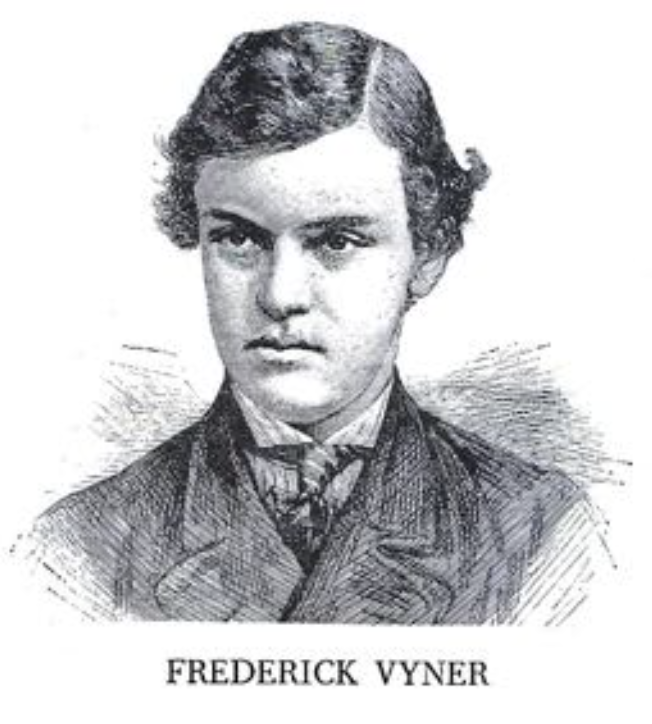
On Sunday 10 April 1870, three English tourists of distinction — Lord and Lady Muncaster and their 23-year-old friend Frederick Vyner — set off from Athens to visit the battlefield of Marathon. They were accompanied by Edward Herbert, secretary to the English Minister in Athens, a young Piedmontese nobleman Count Alberto de Boyl, and an English barrister, Edward Lloyd.
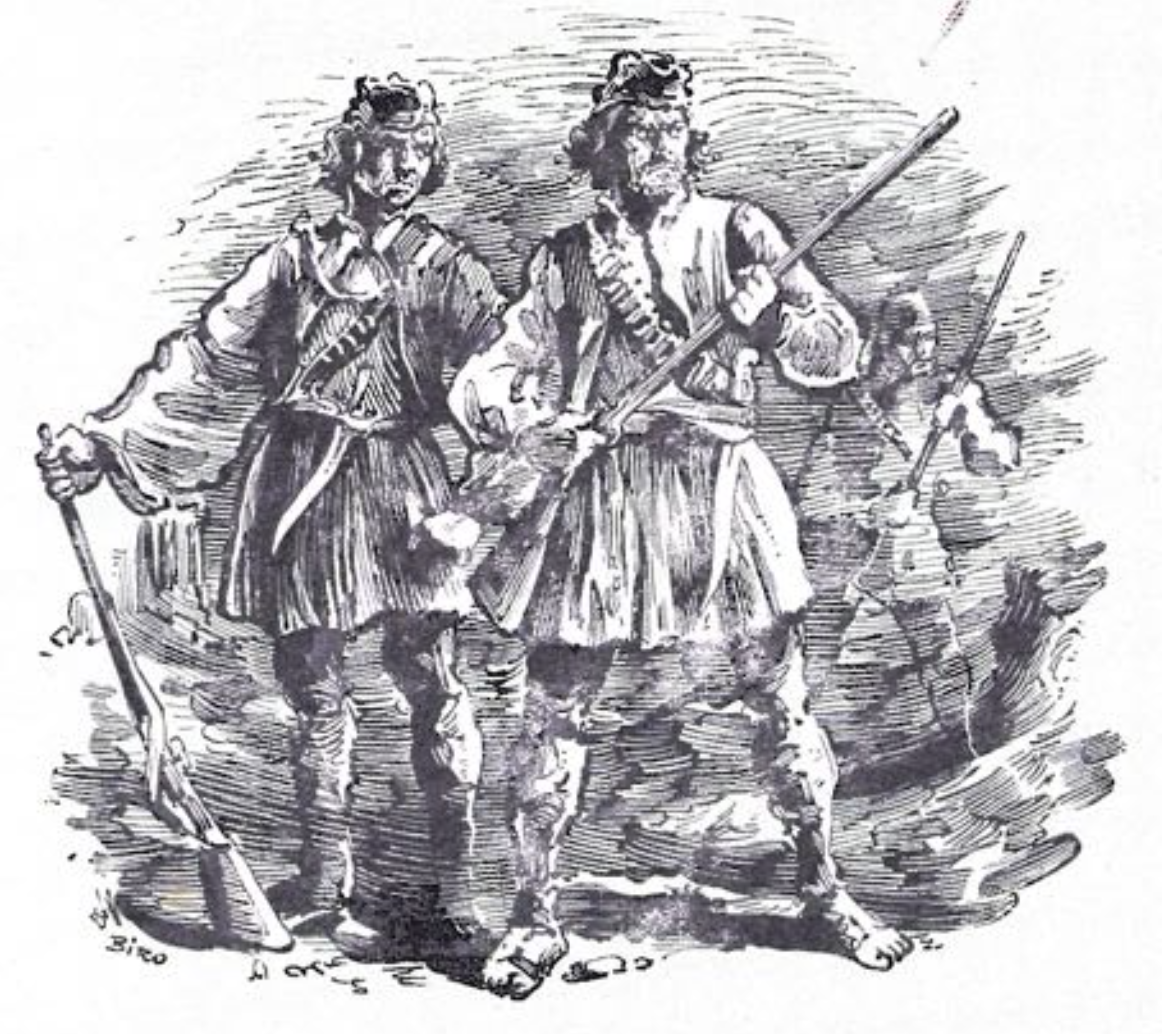
Despite being accompanied by mounted gendarmes and the route having been pre-patrolled by soldiers, the danger of brigands was ever present. The group was kidnapped, and what followed became a major international incident reaching the highest levels of both government and the royal family.
The ransom was raised but the brigands' demands inflated with each negotiation. Impatience led to a military push; the brigand code meant the hostages were executed as soldiers bore down on them. Frederick Vyner was murdered on 21 April 1870. The nation was stunned.
Frederick was the youngest son of Colonel Henry Vyner and his wife Lady Mary. His brother-in-law was George Robinson, 1st Marquess of Ripon, Lord President of the Council. The tragedy was felt at the very heart of Victorian England.
The Memorial Church
William Burges & the Commission
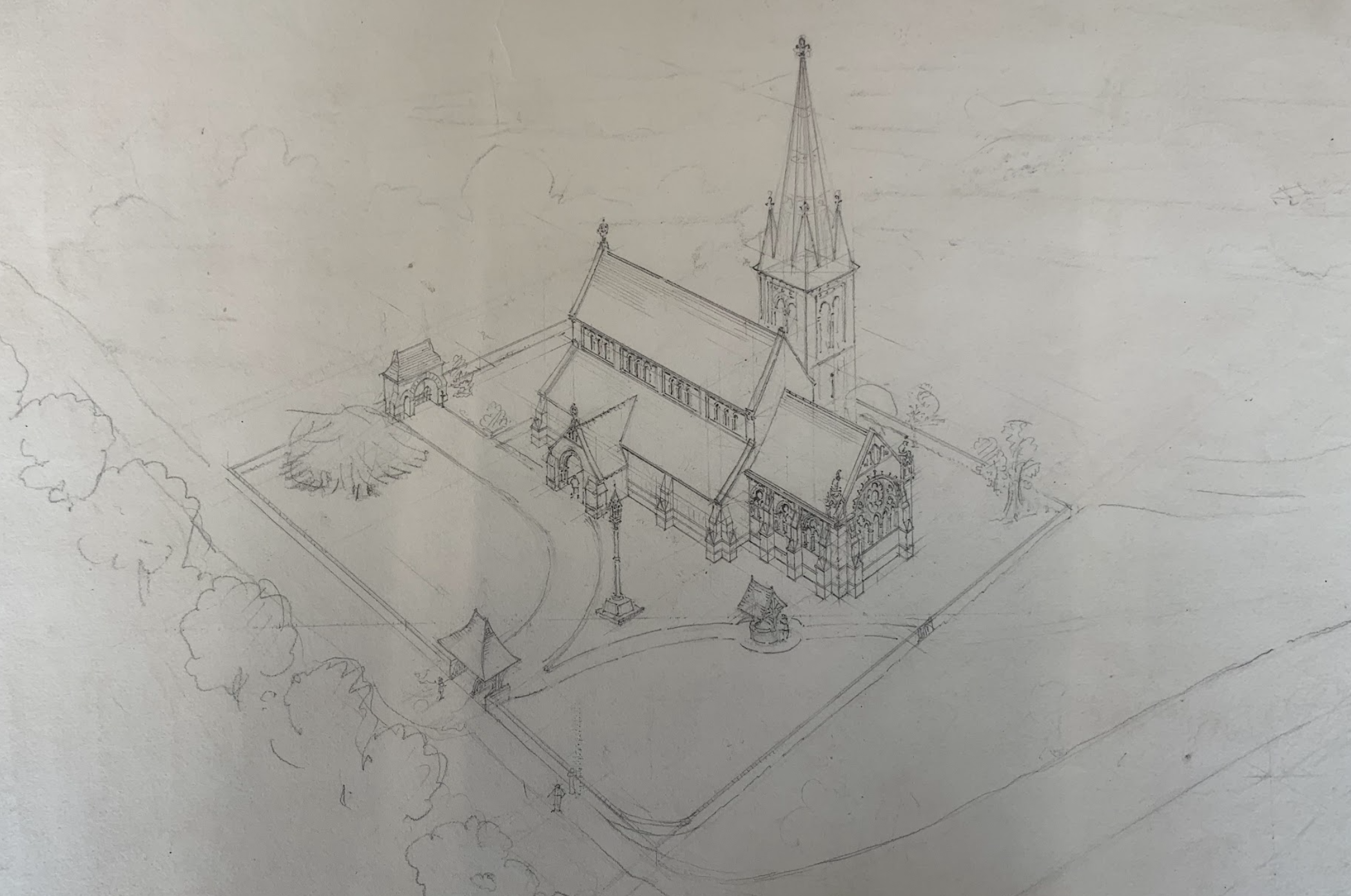
Lady Mary Vyner determined that the uncollected ransom money would be used to construct a memorial church on her Yorkshire estate. Her daughter, Lady Ripon, embarked on an identical project, building St Mary's Church on her estate at Studley Royal.
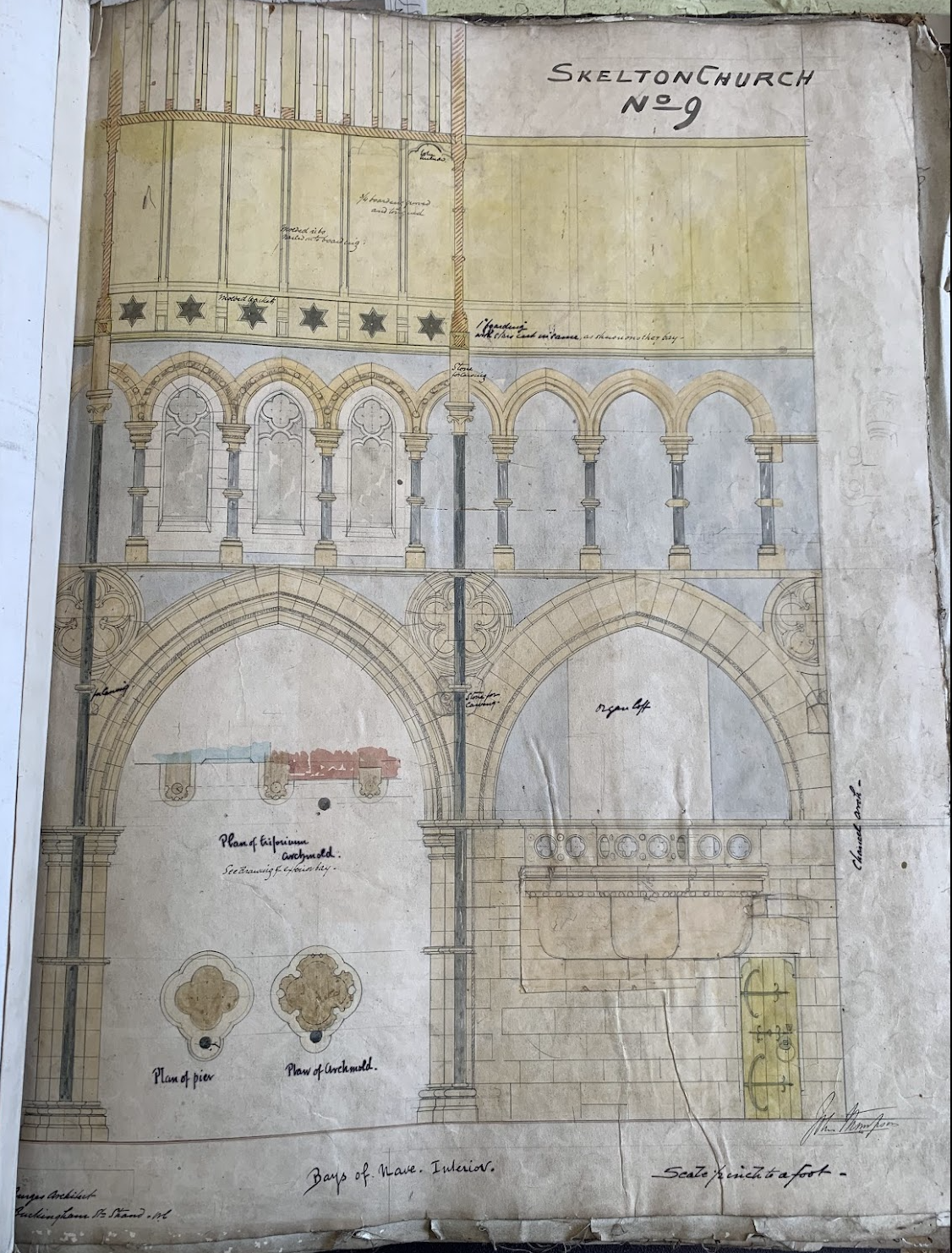
Both churches were commissioned to the architect William Burges (1827–1881) in 1870. The foundation stone was laid on 17 May 1871. Burges engaged his finest craftsmen: Thomas Nicholls and Lonsdale contributed the extraordinary sculptural detail.
The church was complete by 1876 — a building as unique as its name. It is the only church in the world dedicated to the consoling nature of Christ.
Architecture & Design
A Building of Extraordinary Richness
Pevsner described it as 'of determined originality, the impression is one of great opulence, even if of a somewhat elephantine calibre.'
"Perhaps his most perfect creation, and one that can bring the strongest of men to their knees."
The Exterior
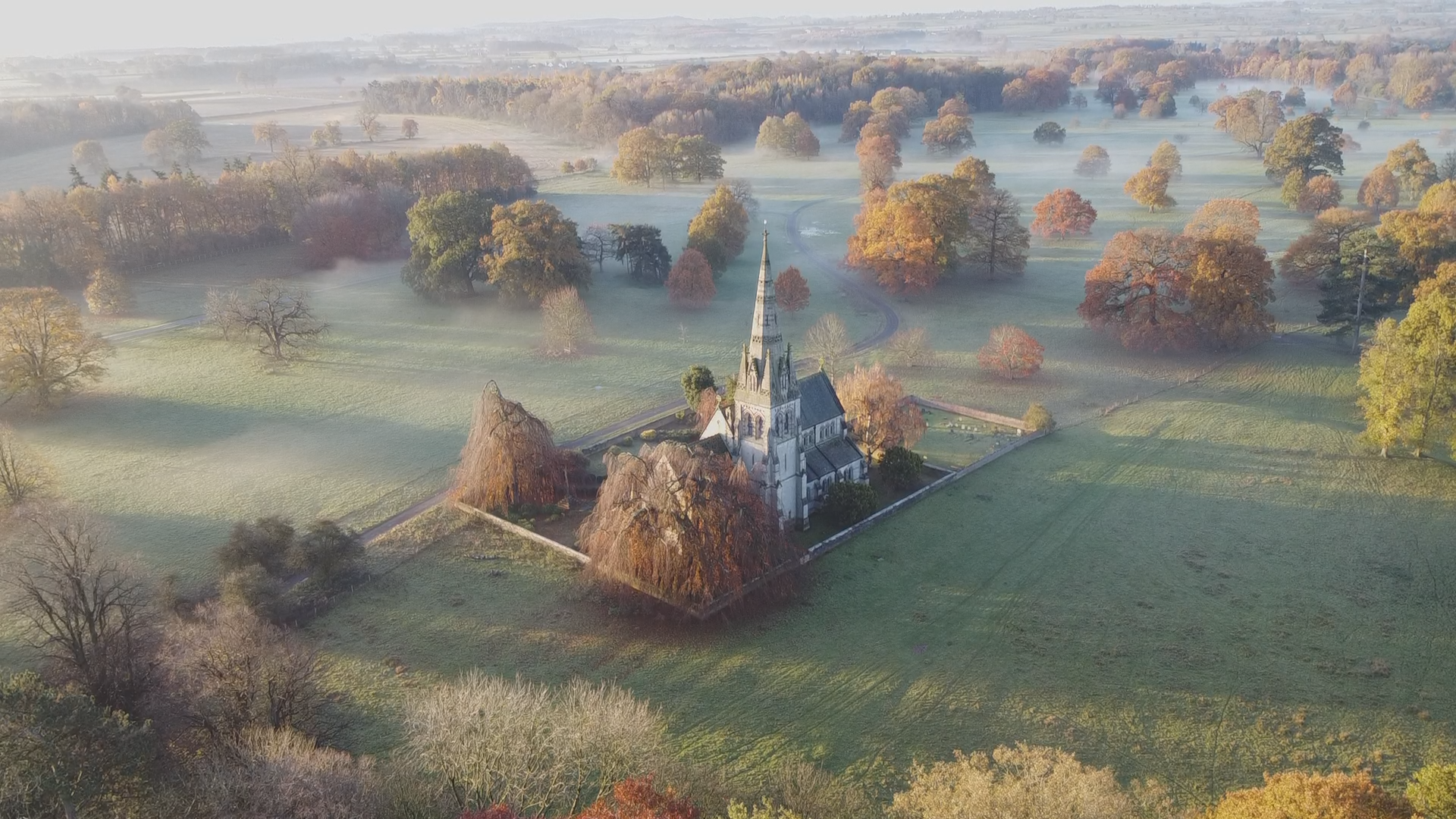
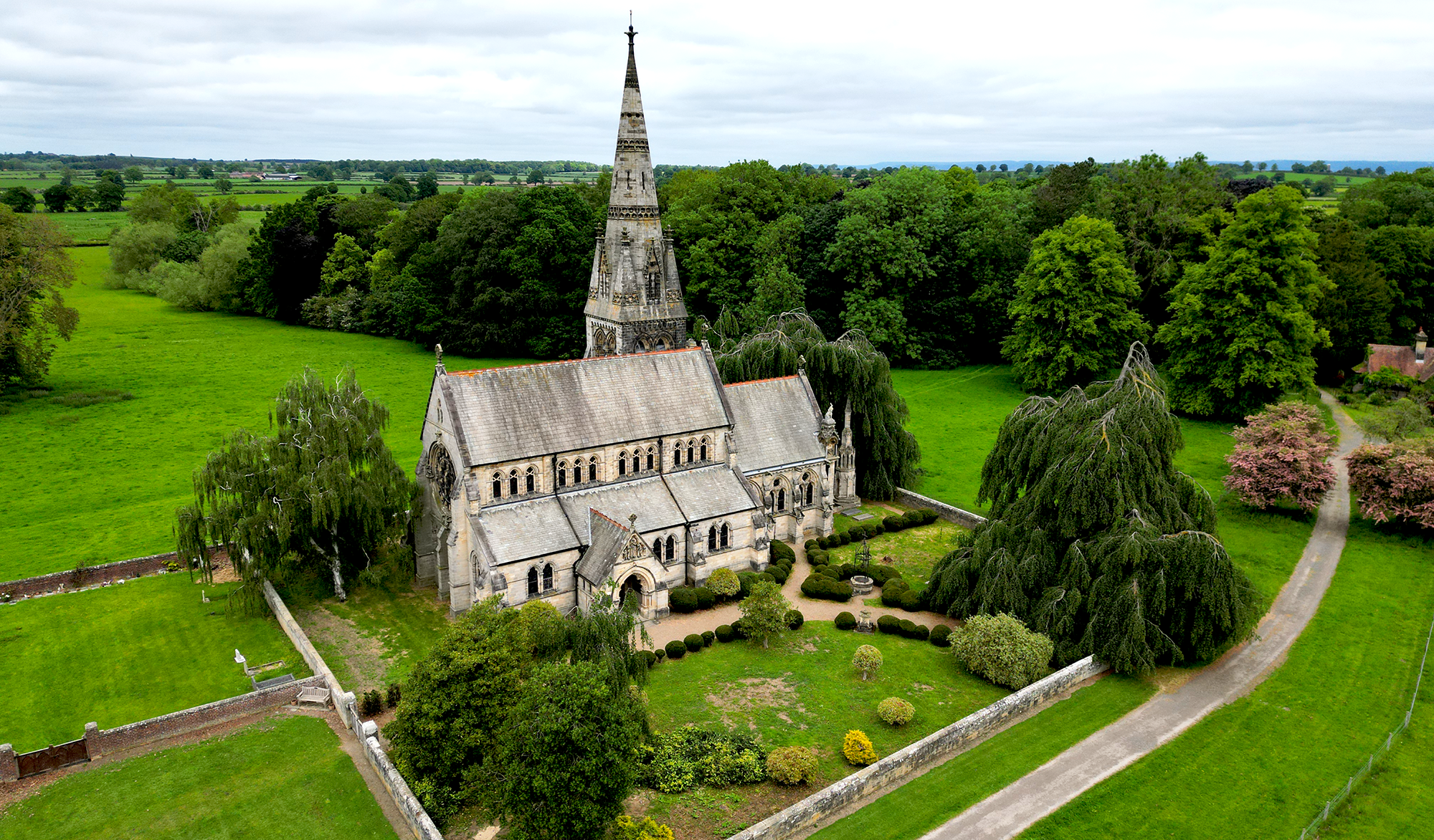
The exterior is constructed of grey Catraig stone, with Morcar stone for the mouldings, in an Early English style. The soaring spire is a landmark visible across the Newby Hall estate.
The Interior
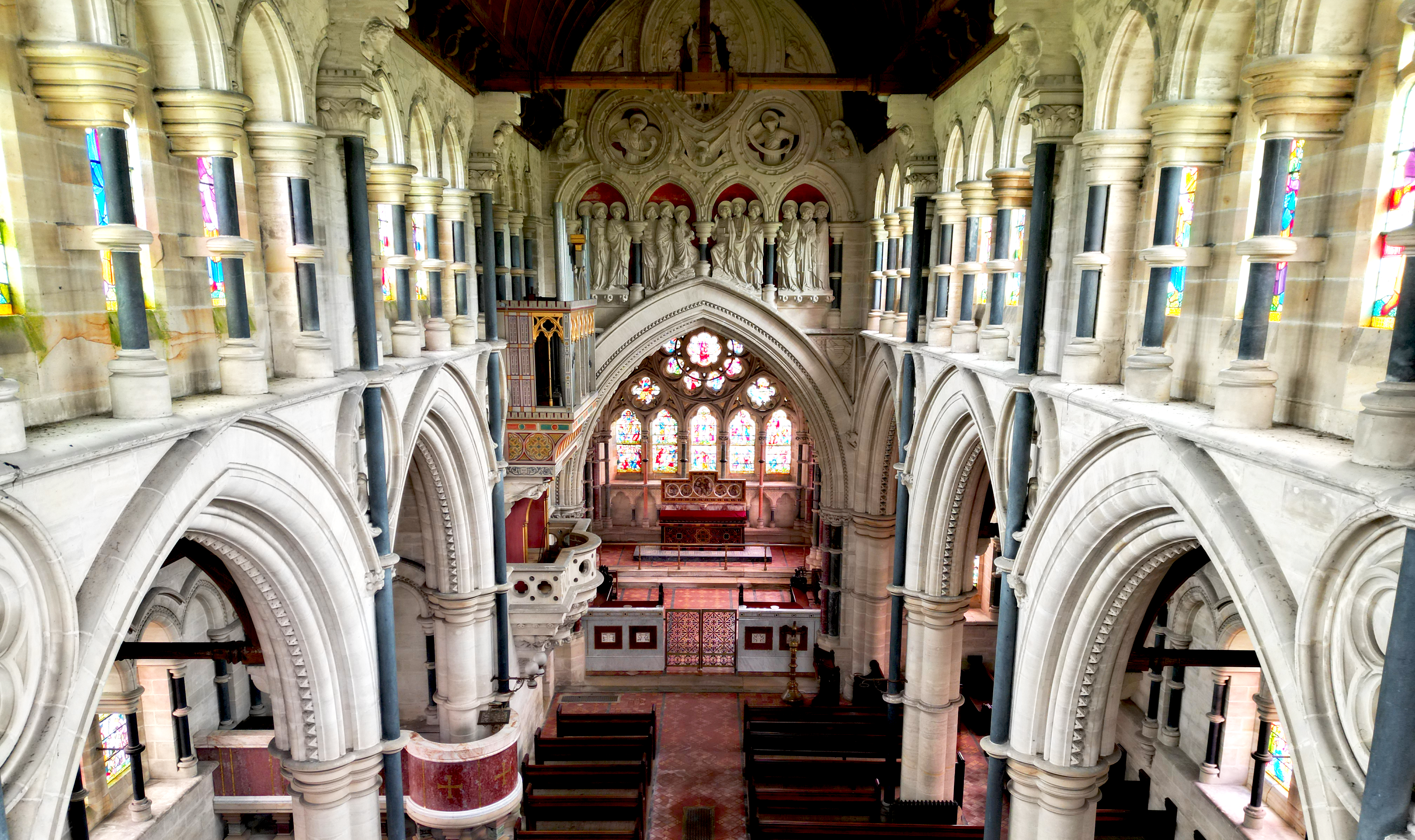
The interior is faced with white limestone and is exceptionally rich. It represents an architectural move from Burges' favourite Early French style to an English inspiration — a unique moment in his career.
The Stained Glass
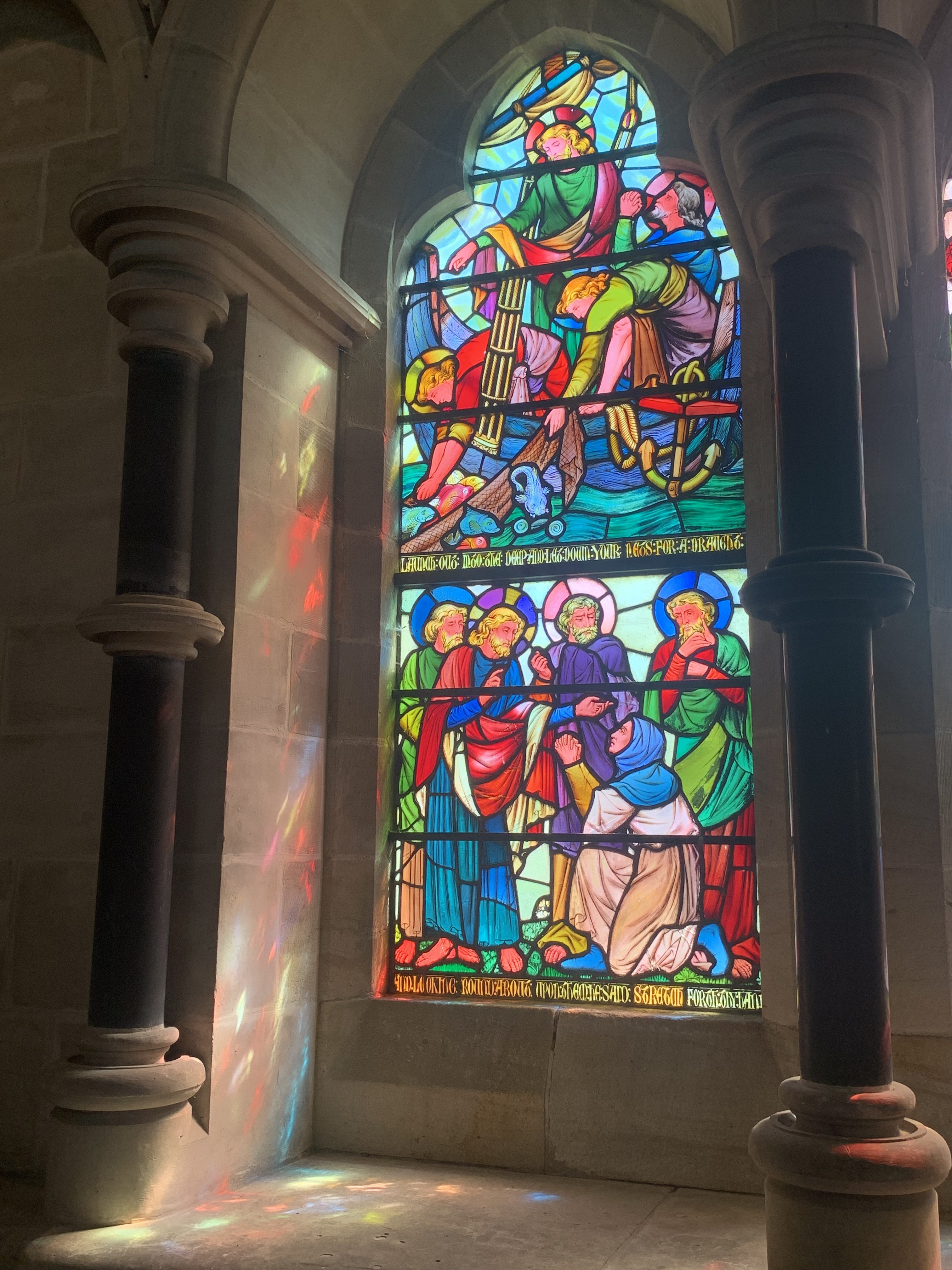
The windows are among the finest examples of Victorian stained glass in England, their jewel-like colours casting extraordinary light across the white limestone interior.
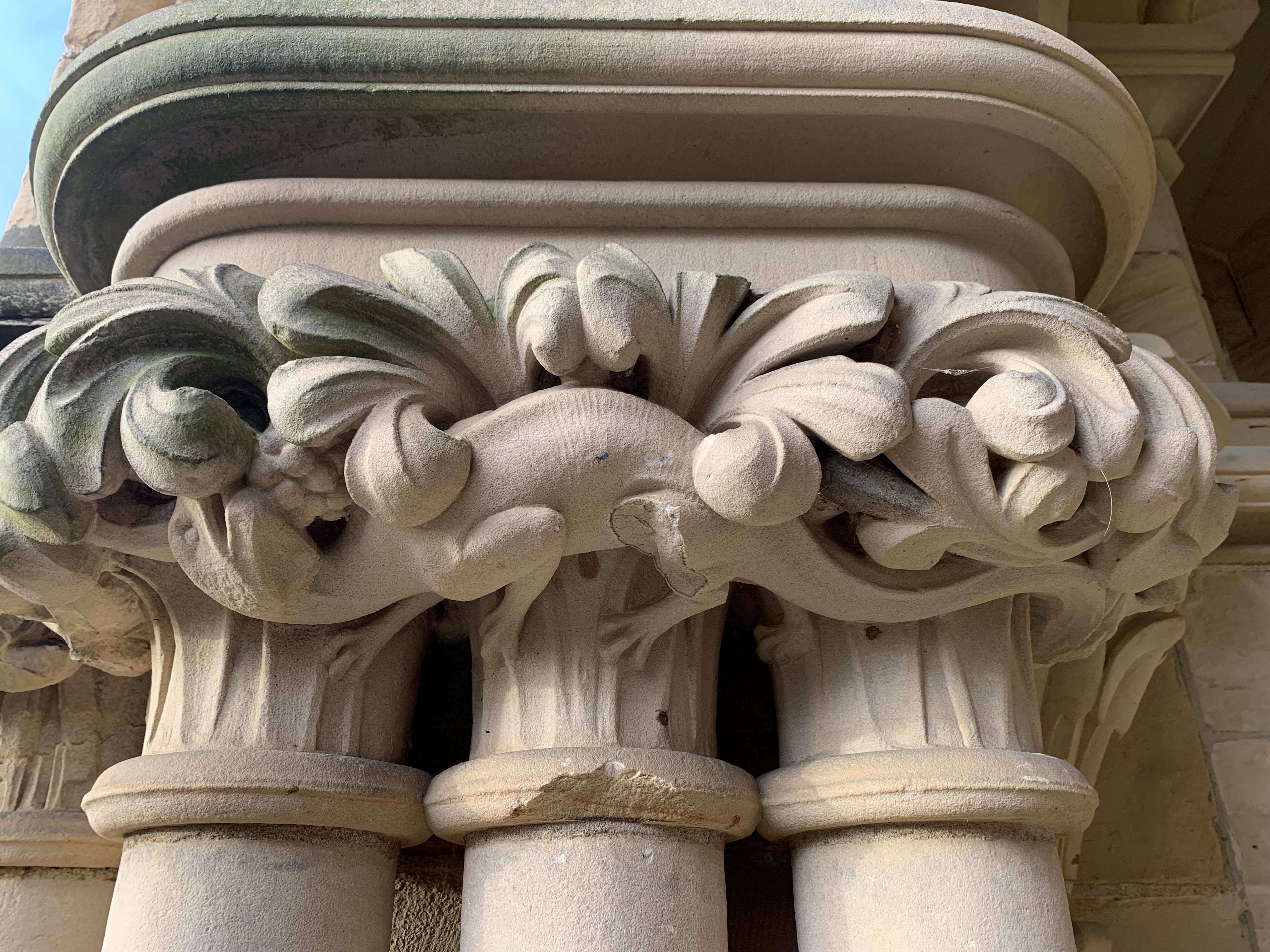
The Carvings
Thomas Nicholls, one of Burges' favourite craftsmen, contributed extraordinary carved stonework throughout the church. Every surface rewards close inspection.
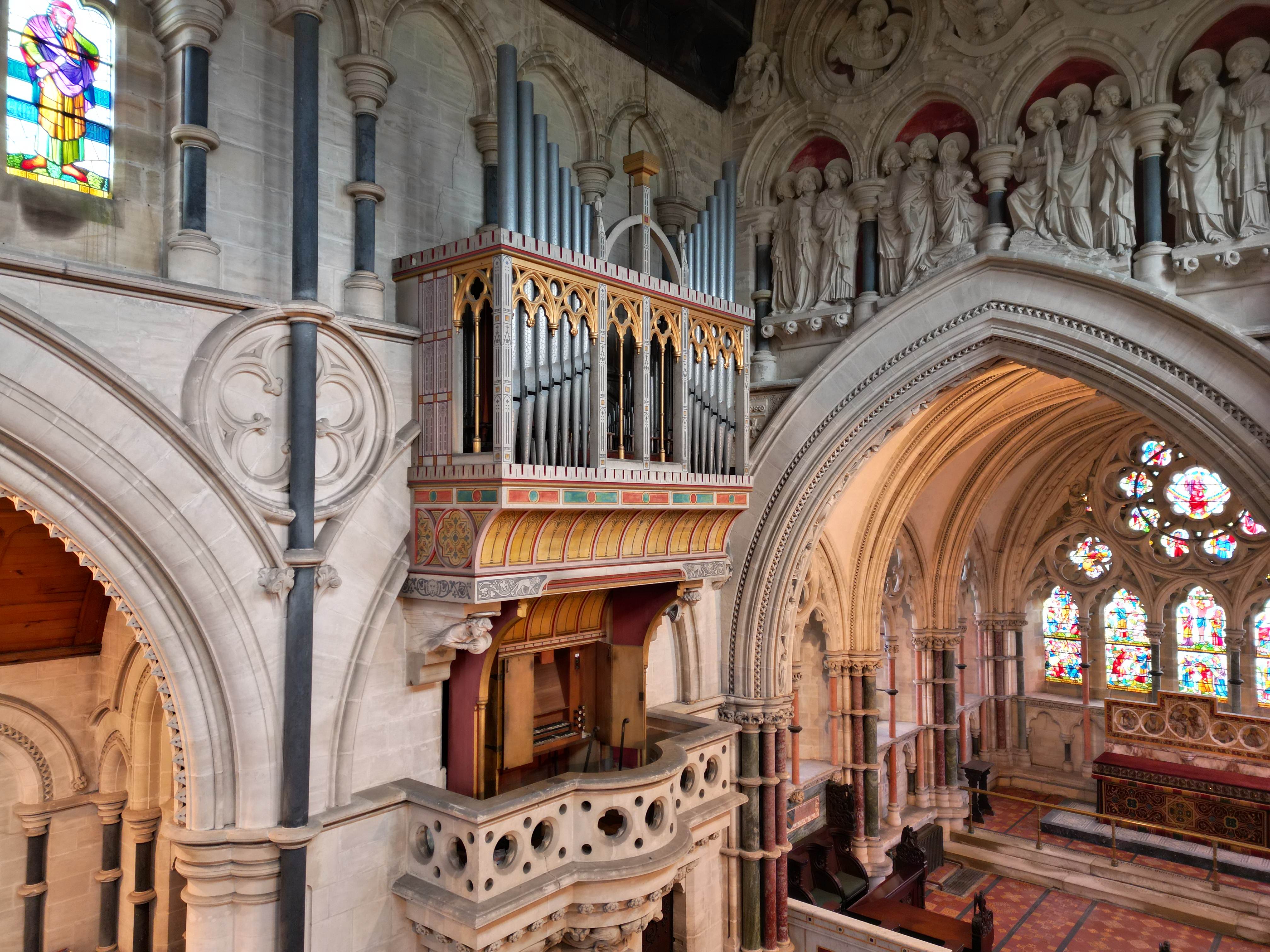
The Organ
The church's Victorian pipe organ is currently the subject of a £250,000 restoration campaign. A fundraising effort is underway to restore it to full working order.
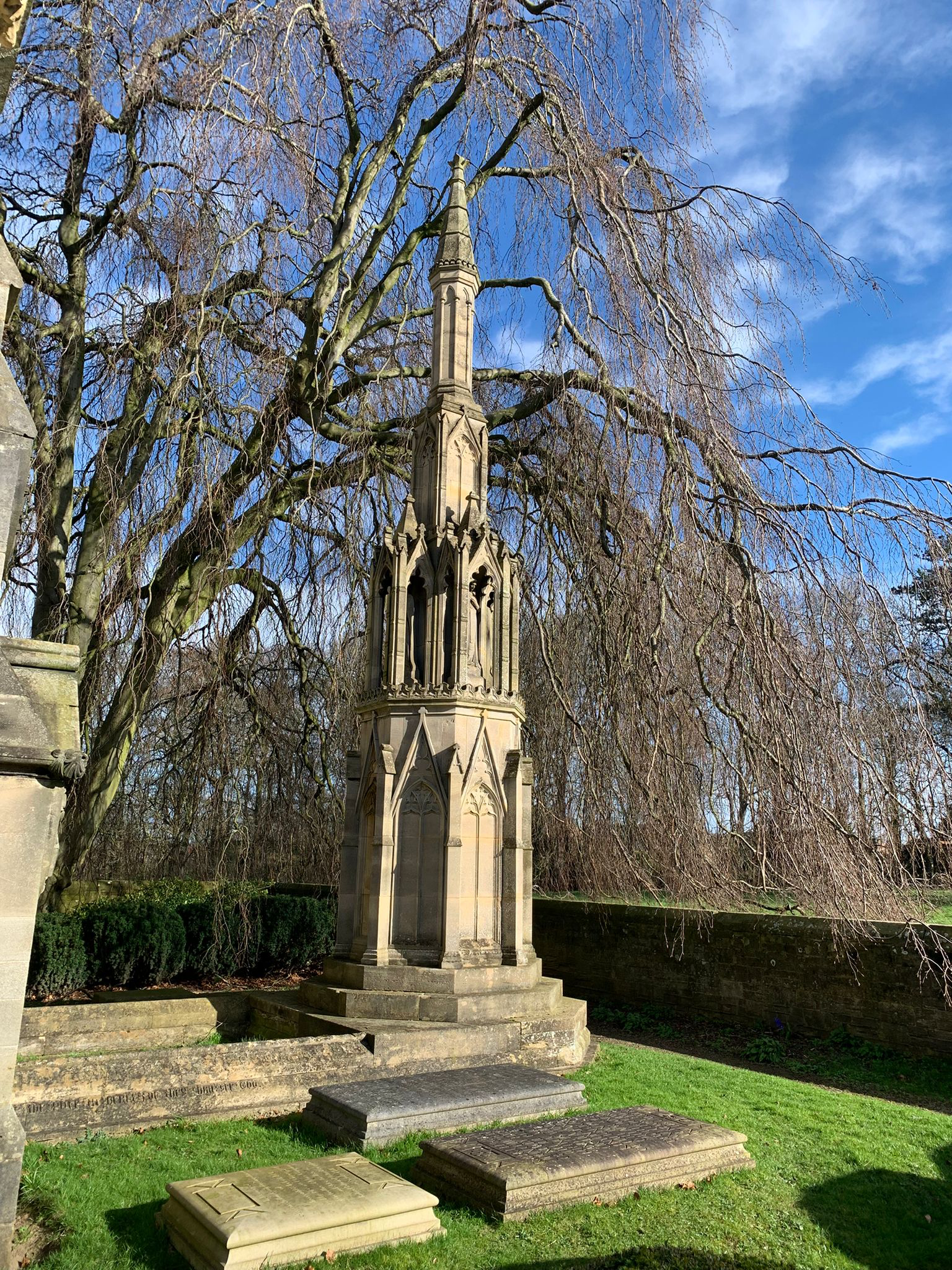
The Eleanor Cross
In the churchyard stands an Eleanor Cross — a memorial in the tradition of the medieval crosses erected by Edward I. It forms part of the wider memorial to Frederick Vyner.
A History in Dates
Timeline
From tragedy to triumph — the story of Christ the Consoler across 150 years.
The Greek Tragedy
On 10 April 1870, Frederick Vyner and companions are kidnapped by Greek brigands near Athens. Despite a ransom being raised, Frederick is murdered on 21 April. The nation is stunned.
A Mother's Resolve
Lady Mary Vyner determines that the uncollected ransom money shall be used to build a memorial church on her North Yorkshire estate at Newby Hall. William Burges is commissioned.
Foundation Stone Laid
The foundation stone of Christ the Consoler is laid on 17 May 1871. Burges engages his finest craftsmen — Thomas Nicholls and Lonsdale — to deliver the extraordinary interior detail.
The Church is Complete
Construction is completed. The church opens as a parish church and memorial — the only church in the world dedicated to the consoling nature of Christ.
Grade I Listed
Christ the Consoler is designated a Grade I listed building on 6 March 1967, recognising it as a building of exceptional architectural and historic interest.
Churches Conservation Trust
The church is vested in the Churches Conservation Trust on 14 December 1991. The CCT takes responsibility for its protection and conservation while keeping it consecrated.
Project 150
To celebrate the church's 150th anniversary, a campaign is launched to raise £250,000 to restore conservation heating and the remarkable Grade I listed Thomas C Lewis pipe organ — ensuring its music will fill the church once again.